The Boy’s Room

The Boy’s Room

In 1956, an Austrian immigrant named Charles Bluhdorn purchased a bumper factory in Grand Rapids, Michigan. It was the first of hundreds of companies that Bluhdorn would purchase over the next quarter century, which together formed Gulf + Western Industries, an iconic U.S. conglomerate. Gulf + Western drained profits from his manufacturing companies to fund media and entertainment companies, including Paramount Pictures. The conglomerate epitomized the larger arc of late twentieth century U.S. capitalism, which has shifted from production of goods to the branding of images and the trading of financial products. Gulf + Western’s exploitation of its manufacturing businesses left hundreds of closed and contaminated factory sites around the country.  Over those same years, its movie studio produced narrative fantasies of success, violence, love, and nostalgia that defined late twentieth century-U.S. culture.

CLICK EACH IMAGE FOR FULL VIEW

_DSC9364

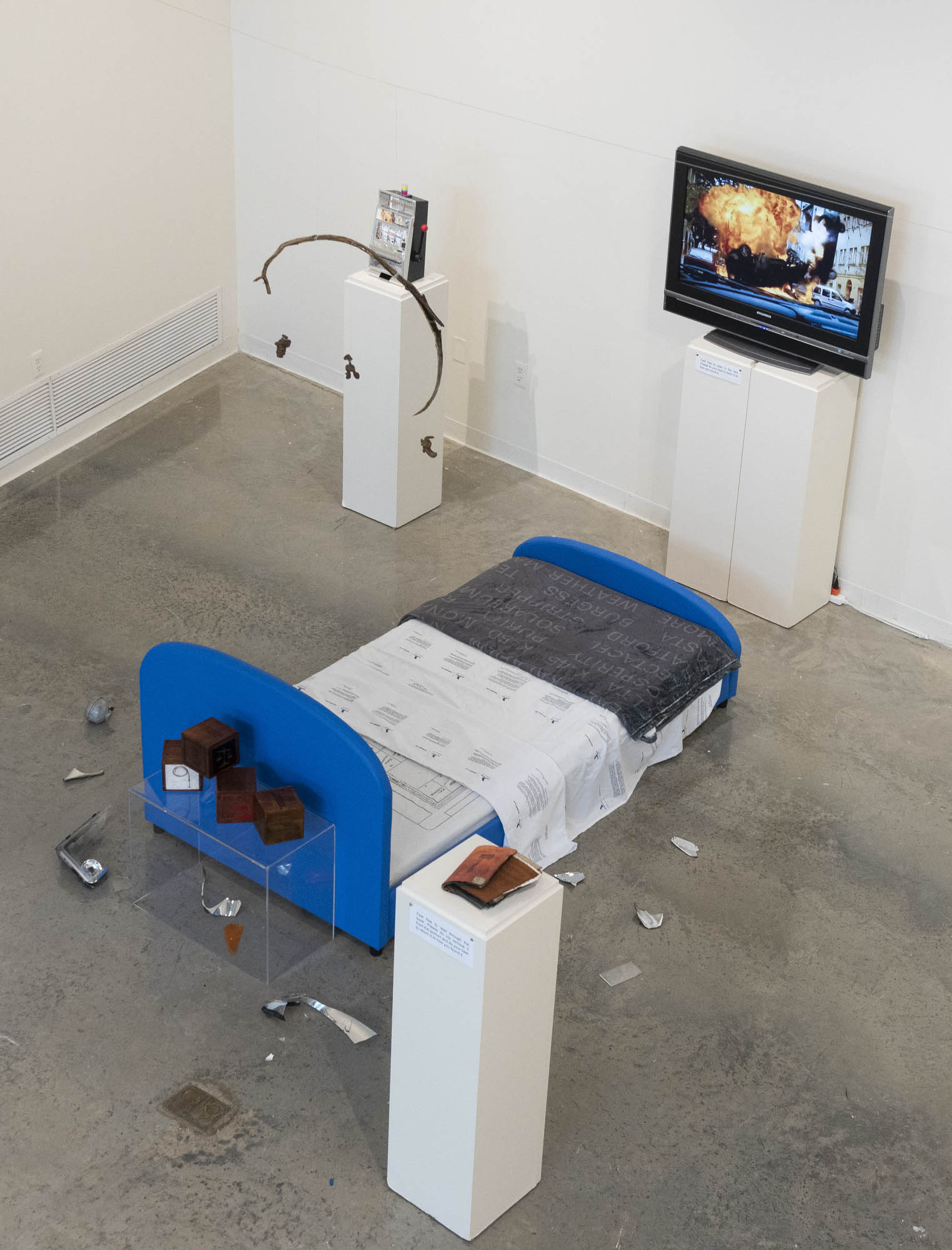
The Boys Room (installation view) (Captain America bed, printed sheets and blanket, headlight pieces scavenged from a car accident site, cigar paper mache, contaminated stick, slot-machine toy, single channel video)

The Boys Room interrogates the relationship between conglomerate-produced, masculine fantasies of status, power, and violence, and the manual labor and material products that funded and were shaped by these fantasies. To commemorate a purveyor of narratives who shuffled companies like playing cards, I’ve handcrafted children’s objects stamped with the corporate-produced dreamscapes we imbibe from the cradle.

_DSC9476

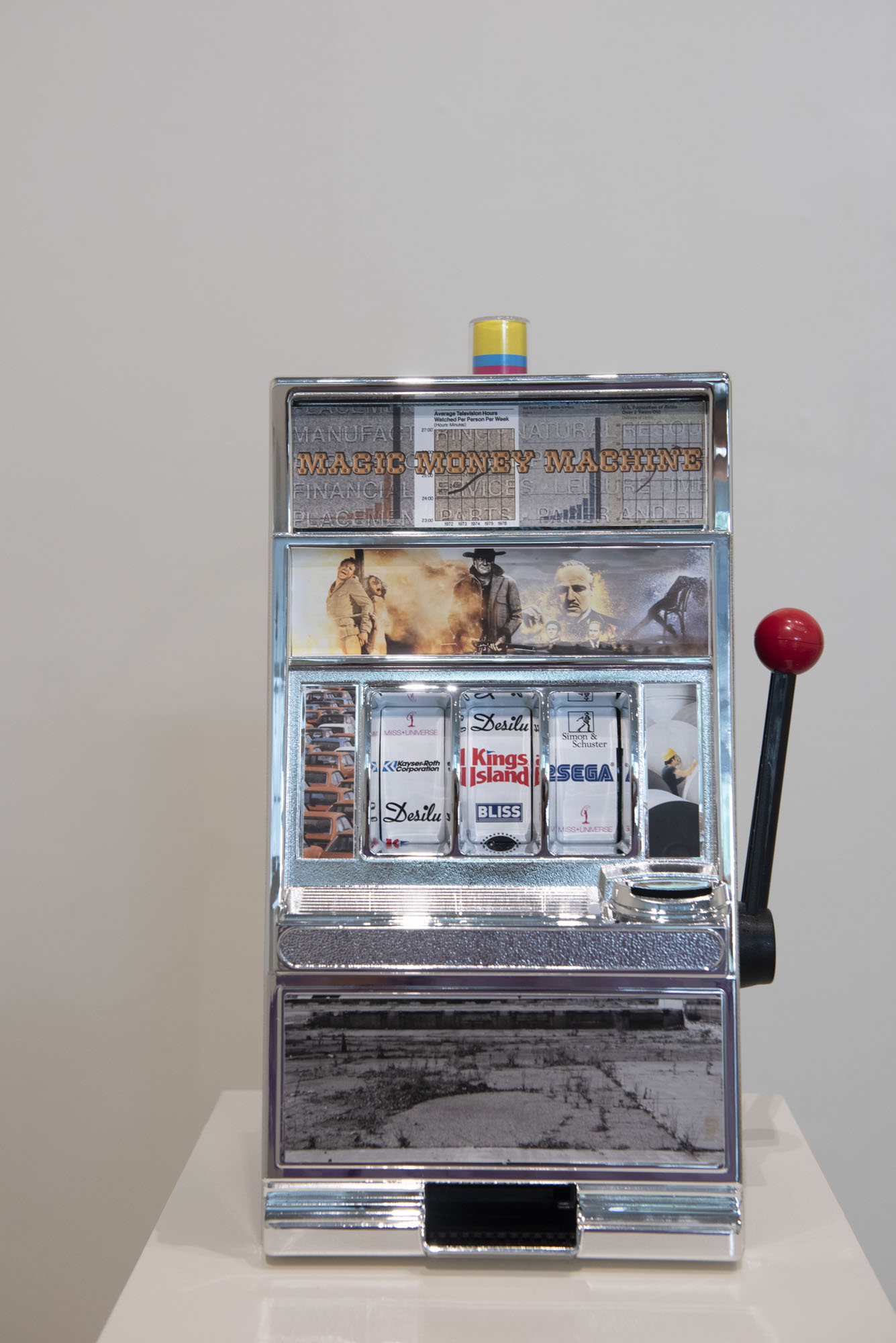
Magic Money Machine repurposes a children’s slot machine toy to embody the American conglomerate’s random shuffling of companies, risking livelihoods and communities in hopes of a future payout for conglomerate owners only. The imagery on the machine includes Gulf + Western's financial reports (top row), characters from Paramount Pictures films (second row), logos of companies acquired by Gulf + Western (reels), images of workers and products from Gulf + Western annual reports (sides), and a present day image of the site of Gulf + Western's Chase Manufacturing in Douglas (acquired in 1964 and vacated in 1971). The machine is inspired by one economist’s description of a conglomerate company as a “magic money machine.” When conglomerates made a purchase, they would often skim money off the top of their existing portfolio of companies or leverage equipment of the company they wished to buy, securing loans that were sometimes larger than what the entire conglomerate was worth.

_DSC9420

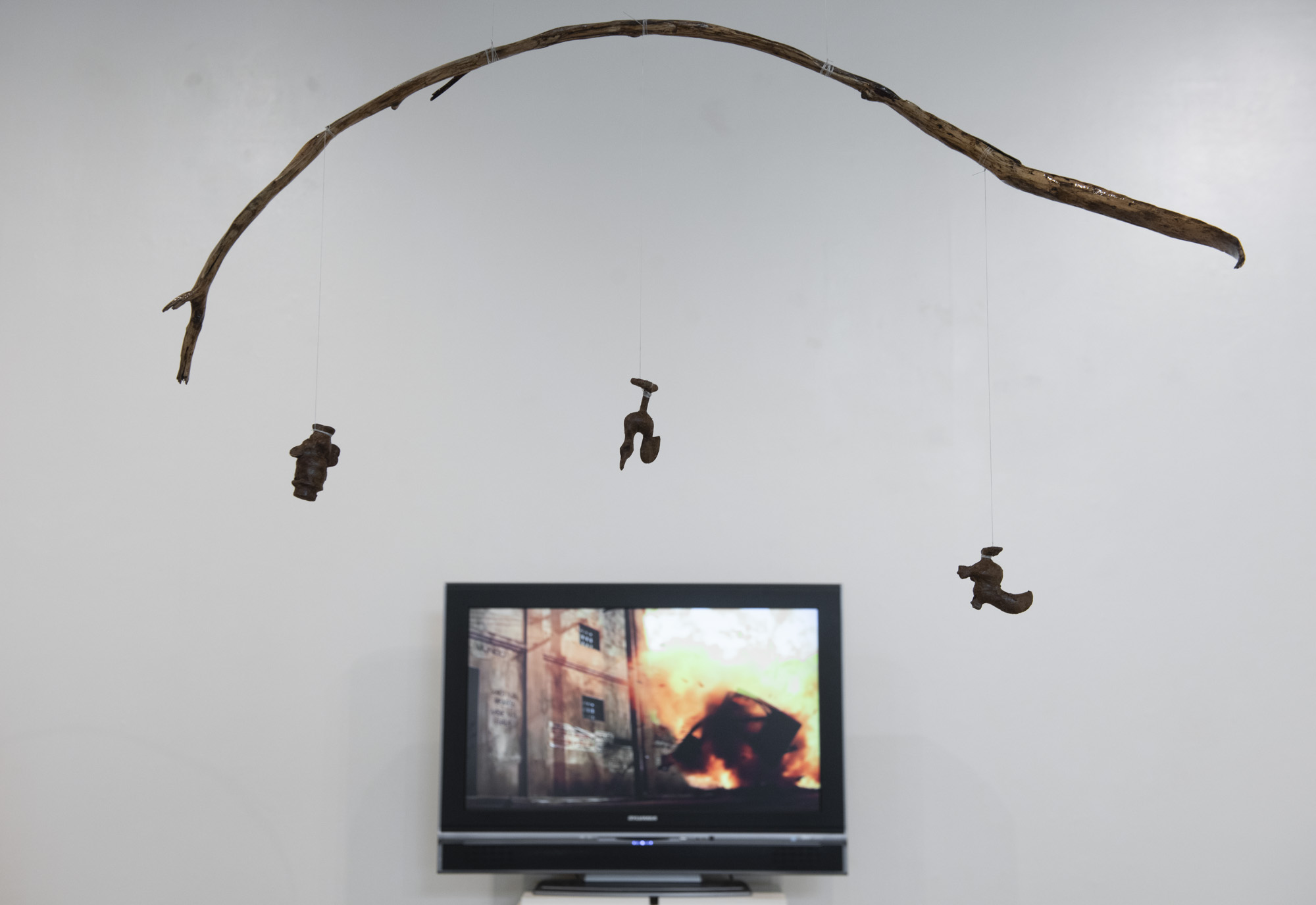
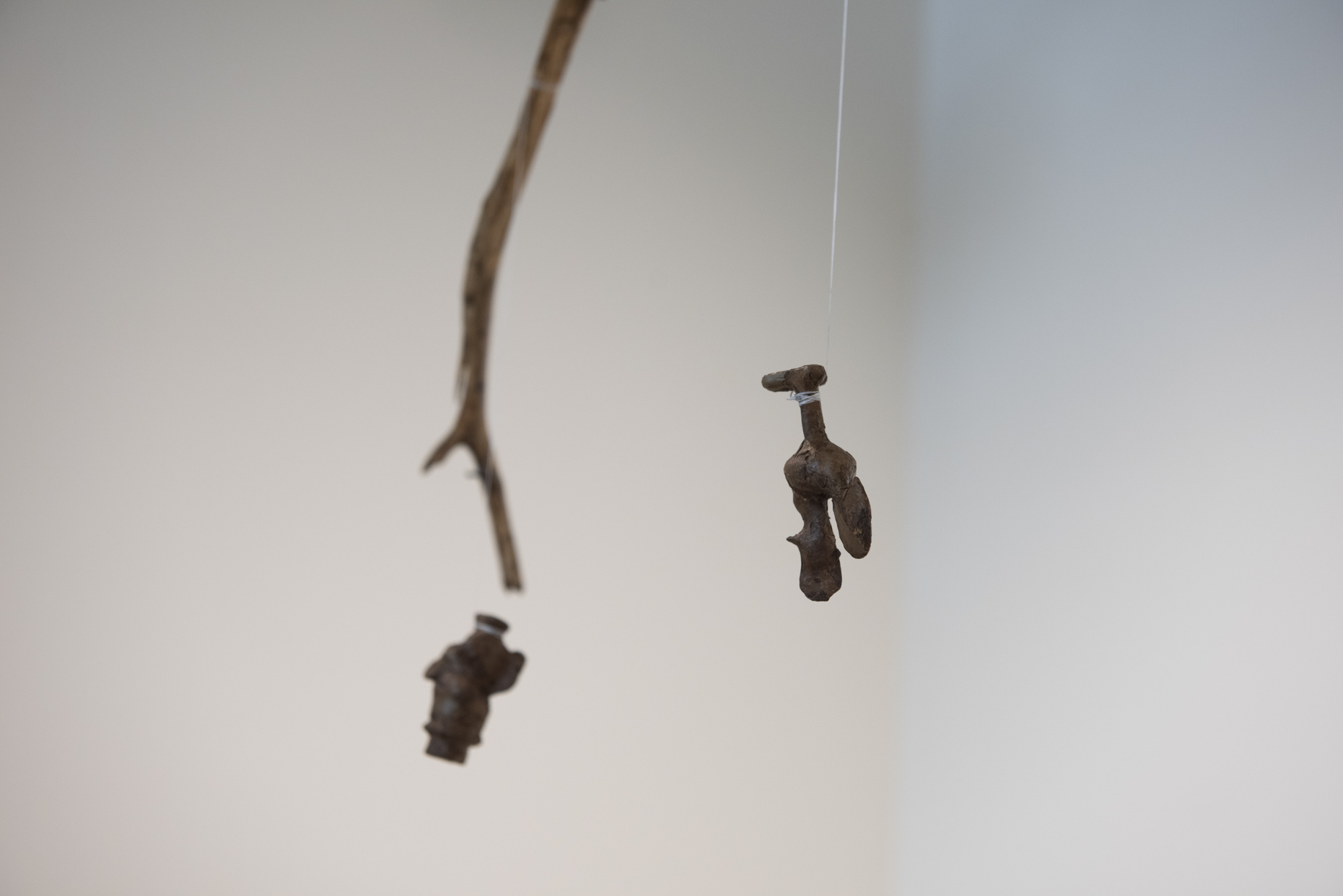
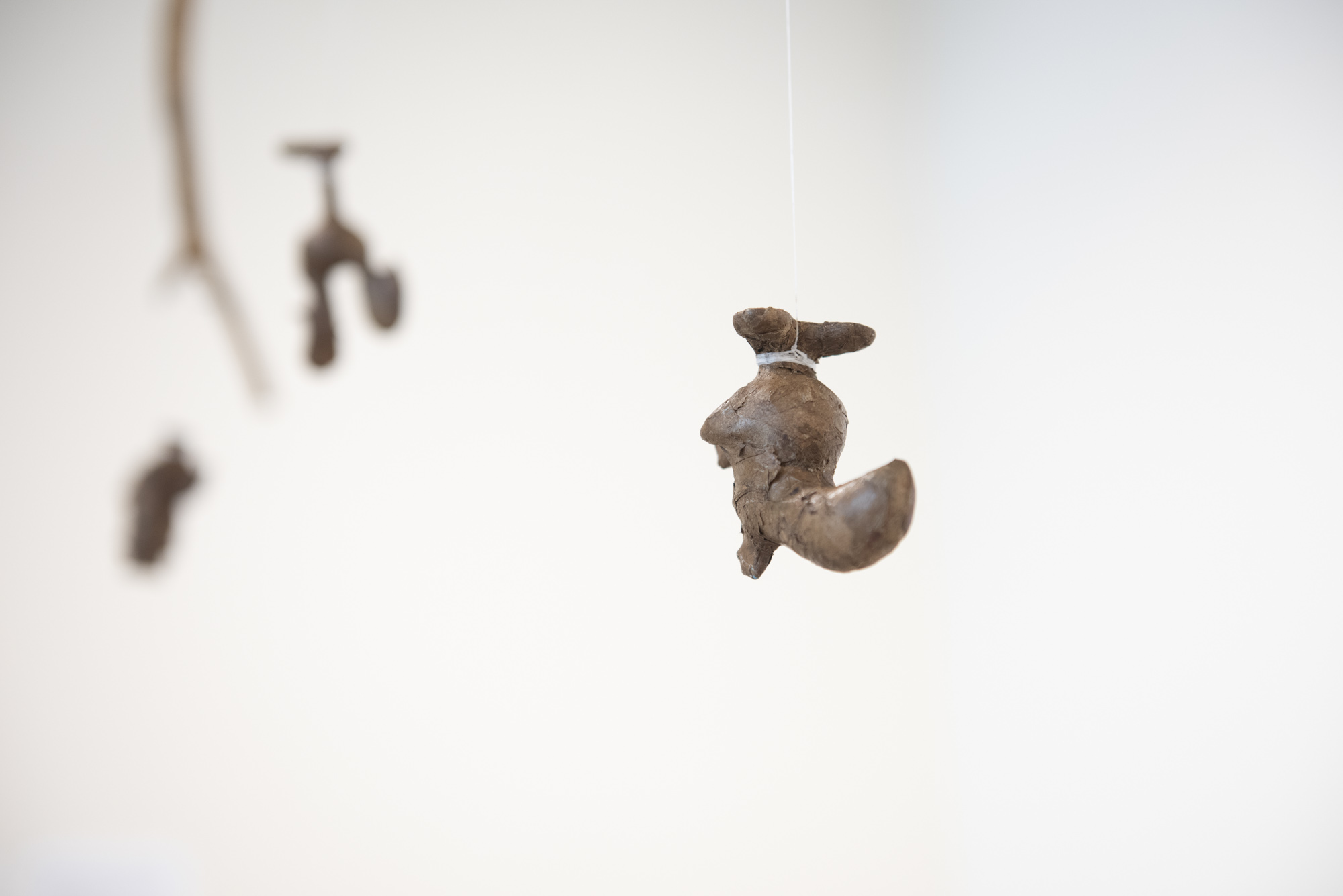
That’ll Rot Your Teeth (cigar paper and contaminated stick) constructs a children’s mobile from a refinished stick found at the highly contaminated Brown Paper Factory in Parchment Michigan, where children often play in the sprawling abandoned complex. The figures, suspended by dental floss are cereal box mascots (Cornelius the Rooster, Toucan Sam and Honey the Honeybee) packaging manufactured by Brown Paper Company. They are wrapped in Dutch Masters tobacco papers (a mainstay of Consolidated Cigar, acquired by Gulf + Western acquired in 1968).

Exploding Cars (single-channel video) loops car explosion scenes from several Paramount movies, mayhem that is marketed for our pleasure while exploiting our fears and fantasies about mundane daily life going up in smoke. At the same time, the exploding cars are a stand in for the destruction of the manufacturing industry by conglomerate’s bottom-line motives. LINK TO VIDEO

_DSC9415

That'll Rot Your Teeth (detail 1)

_DSC9411

That'll Rot Your Teeth (detail 2)

_DSC9443

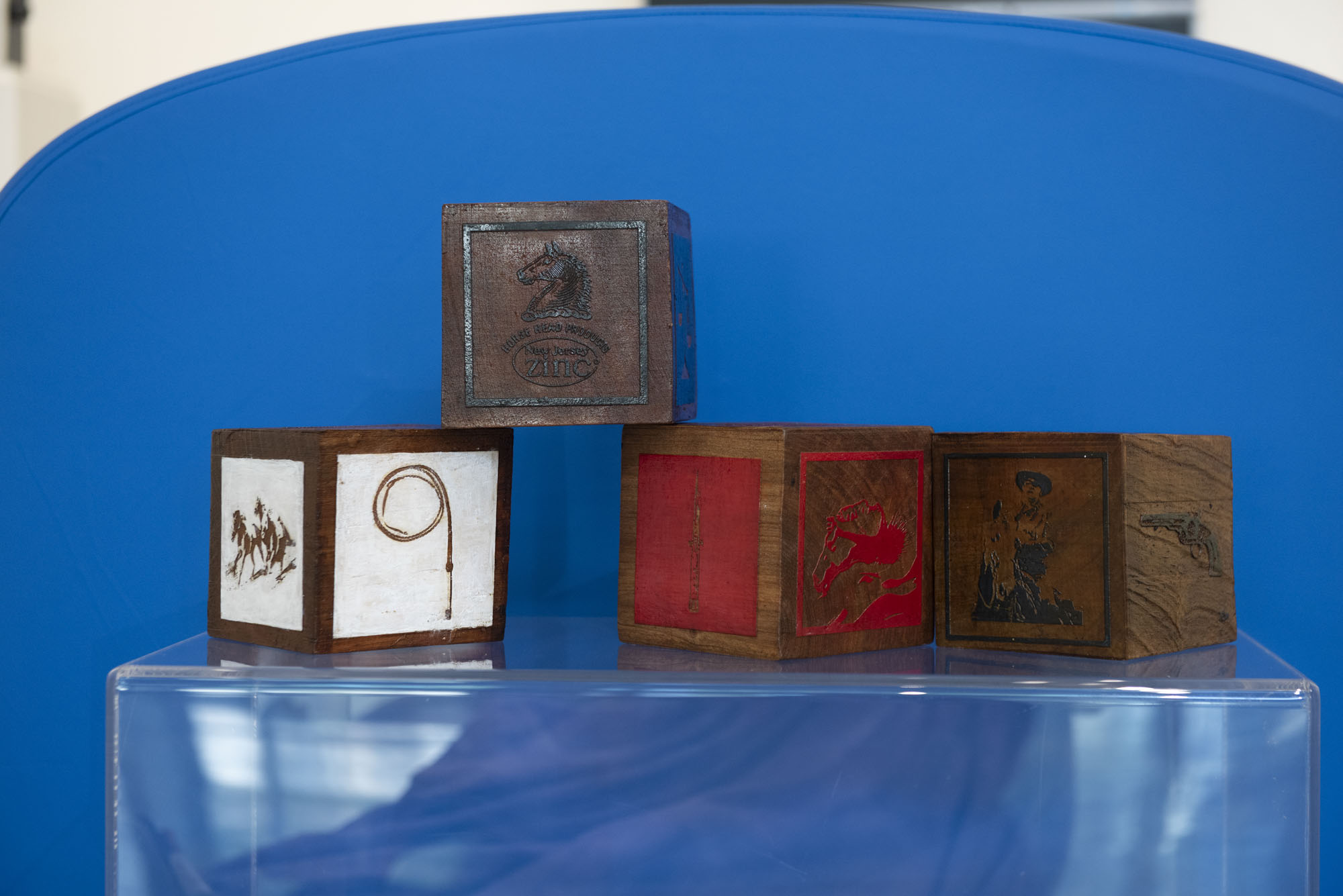
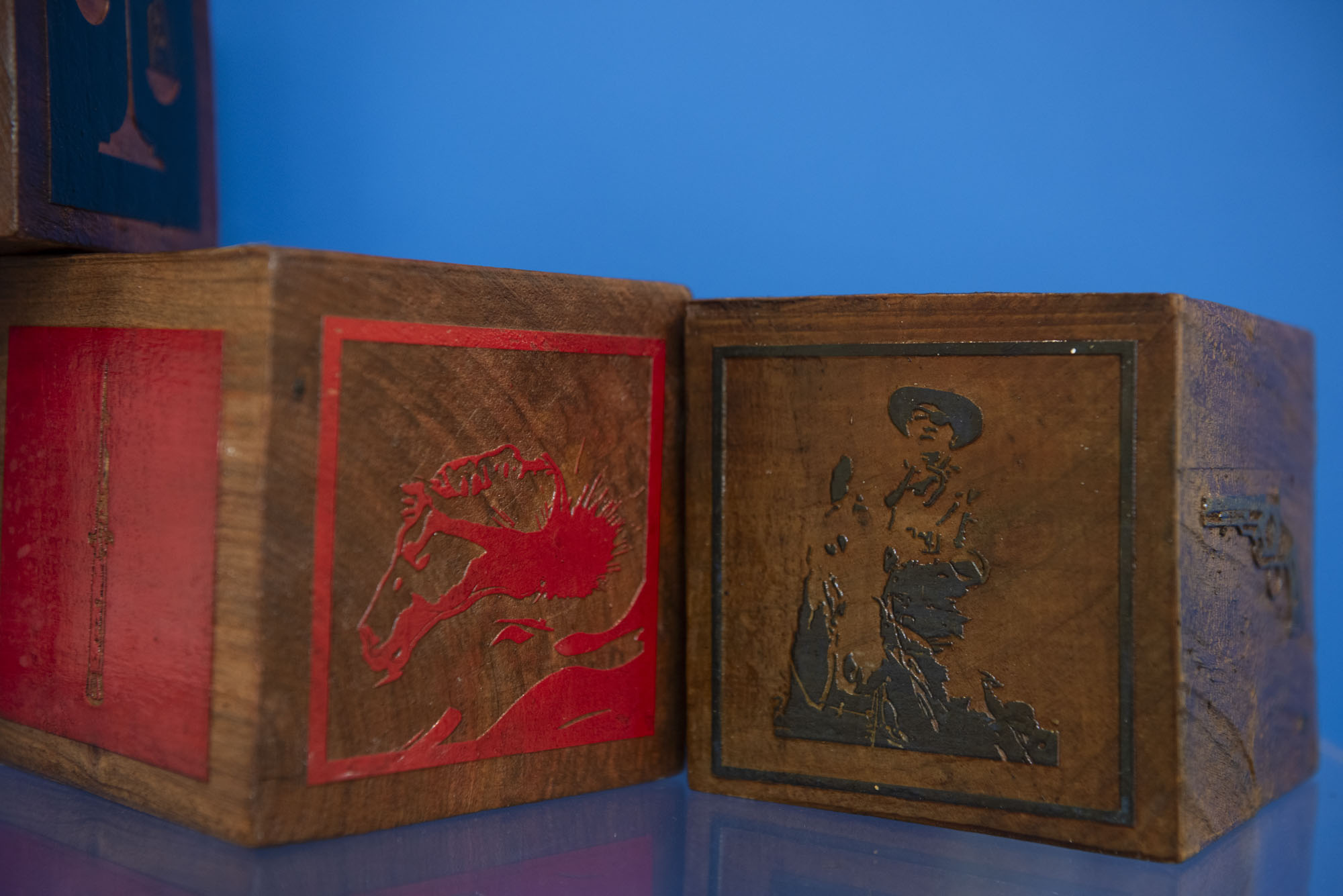
Although Gulf + Western saw itself as a cutting-edge modernist company, several of its companies and products used the imagery of a horse – a power source of the early 19th century that transmuted into a symbol of both Western authenticity and disposable wealth by the twentieth.

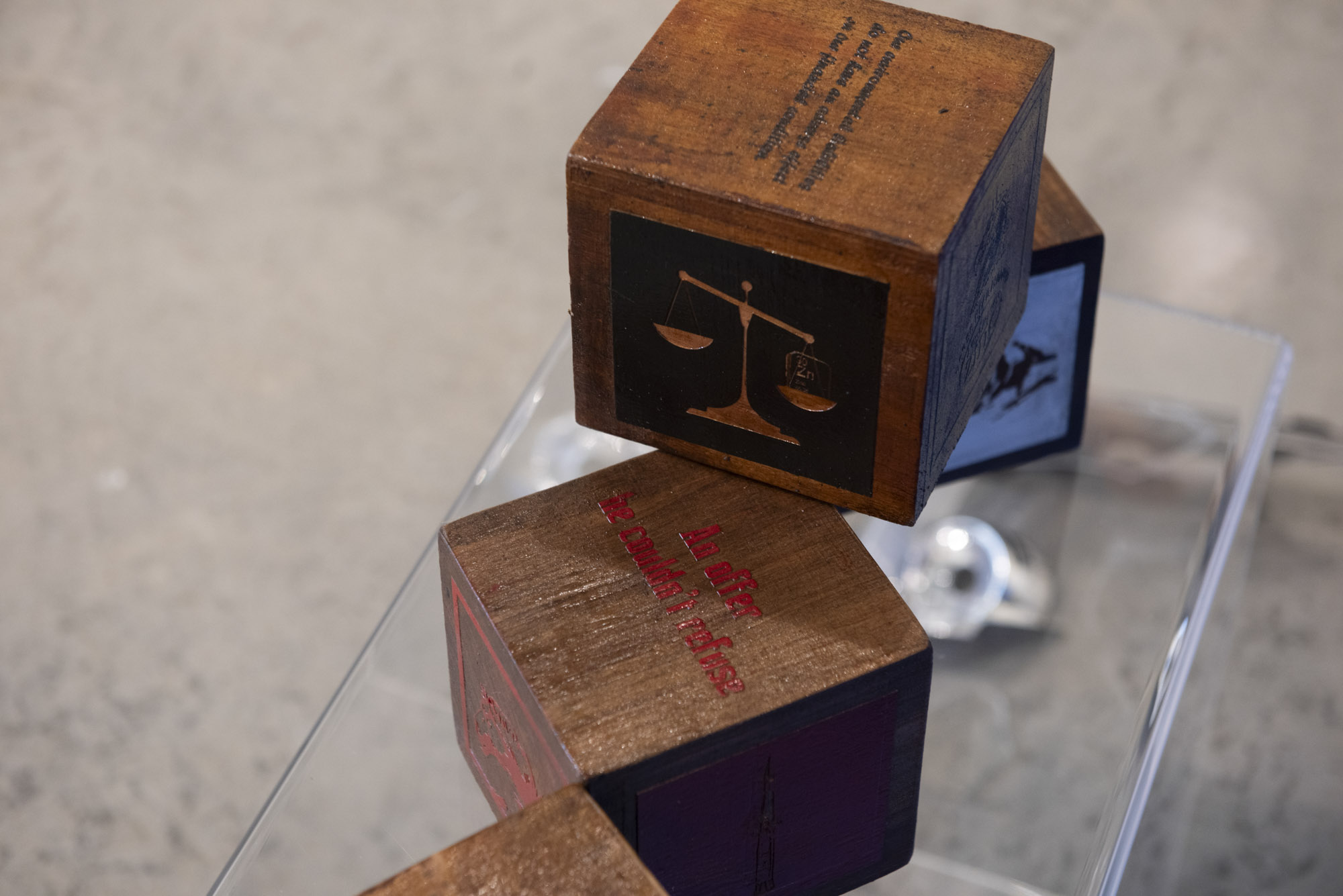
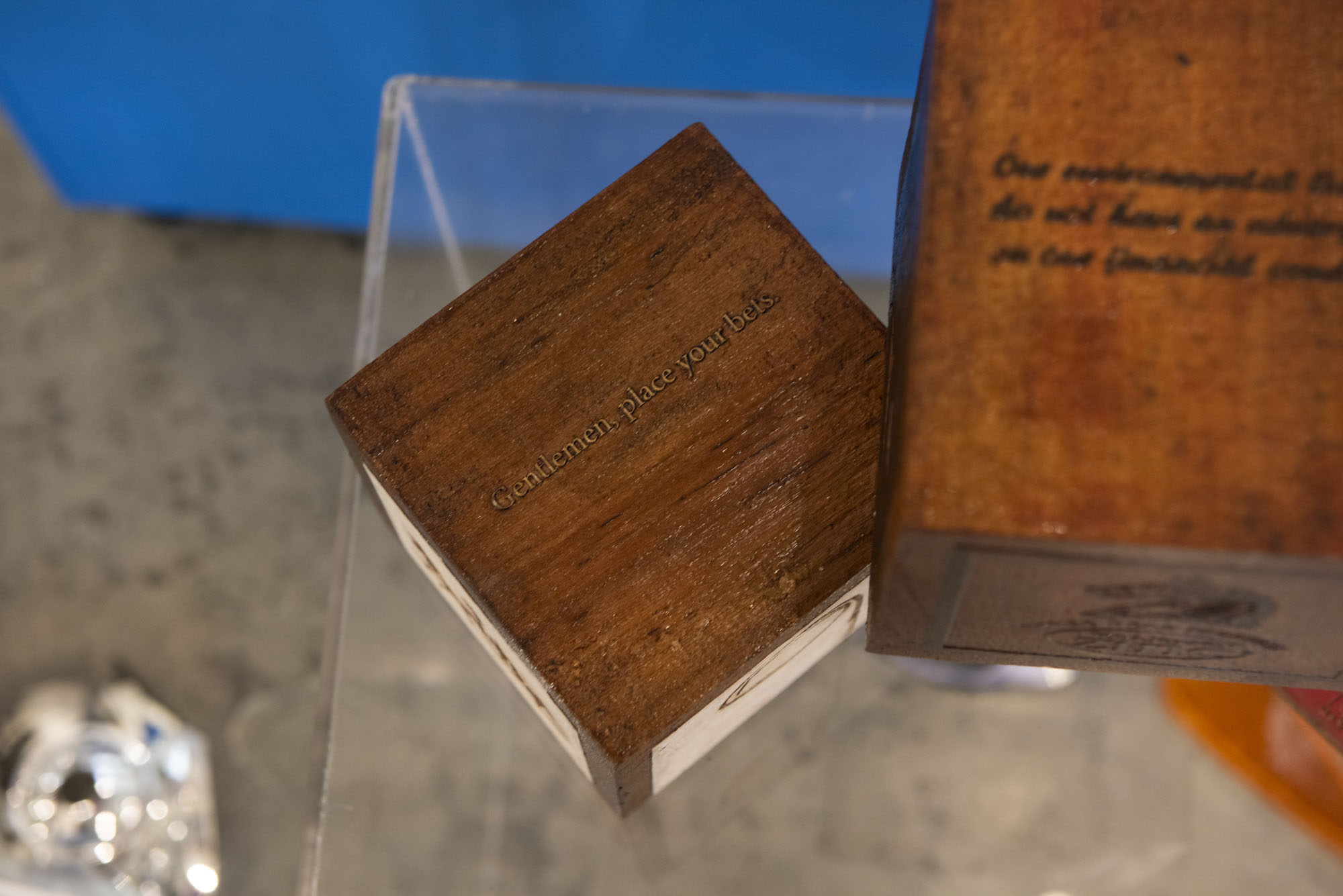
Building Blocks (The Four Horsemen of Gulf + Western) (carved wood from former Gulf + Western/Brown Paper Company timberlands) are another children’s toy based on the Four Horsemen of the apocalypse applied to Gulf + Western’s horse-related brands. These include Chicago Thoroughbred Industries horserace tracks (Conquest), The iconic horse head from The Godfather (War), New Jersey Zinc’s horse head (Famine) and John Wayne riding a horse in True Grit (Death).

_DSC9436

Building Blocks (The Four Horsemen of Gulf + Western) (detail 1)

_DSC9452

Building Blocks (The Four Horsemen of Gulf + Western) (detail 2)

_DSC9466

Building Blocks (The Four Horsemen of Gulf + Western) (detail 3)

IMG_8767-Edit-2

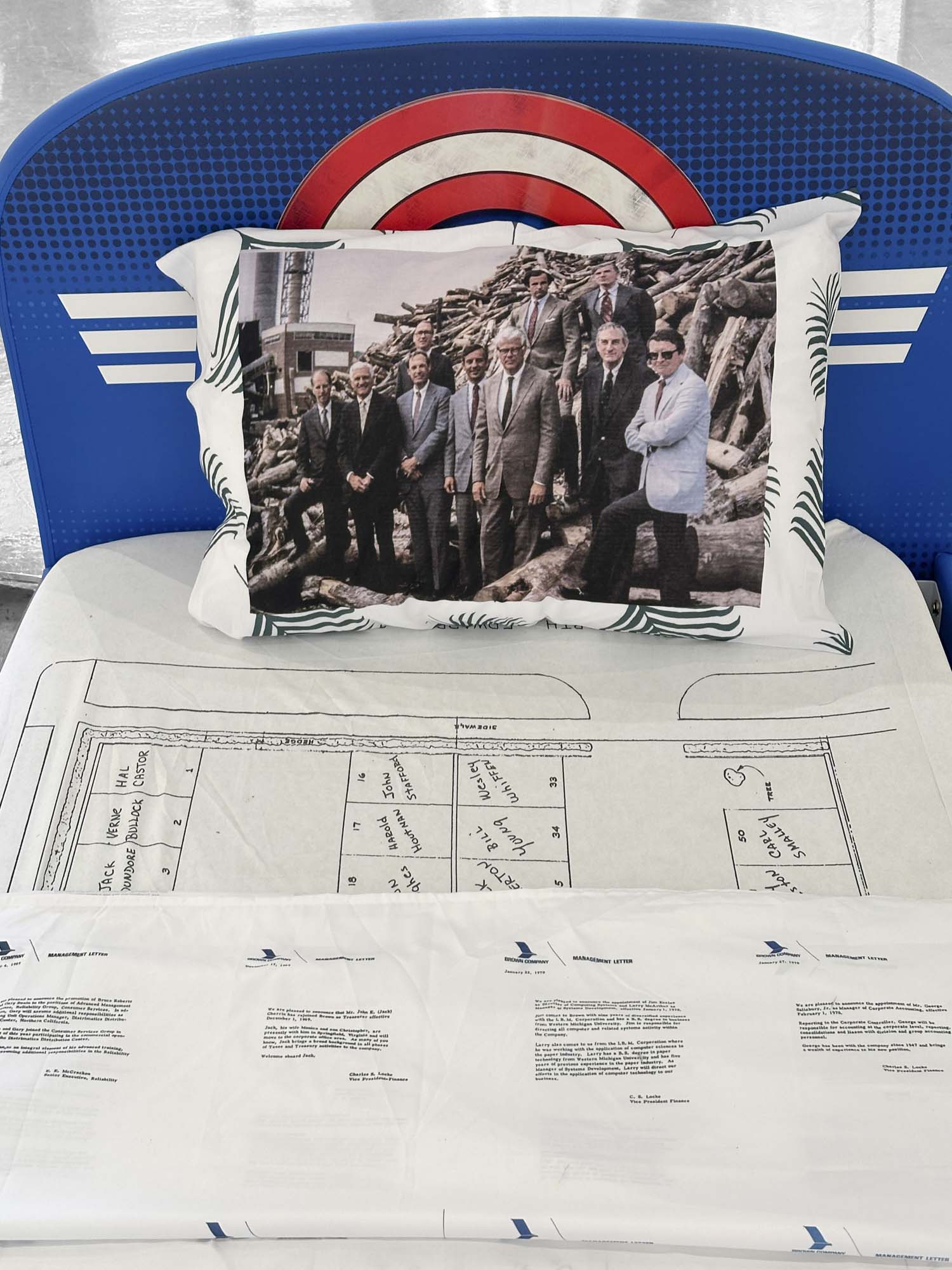
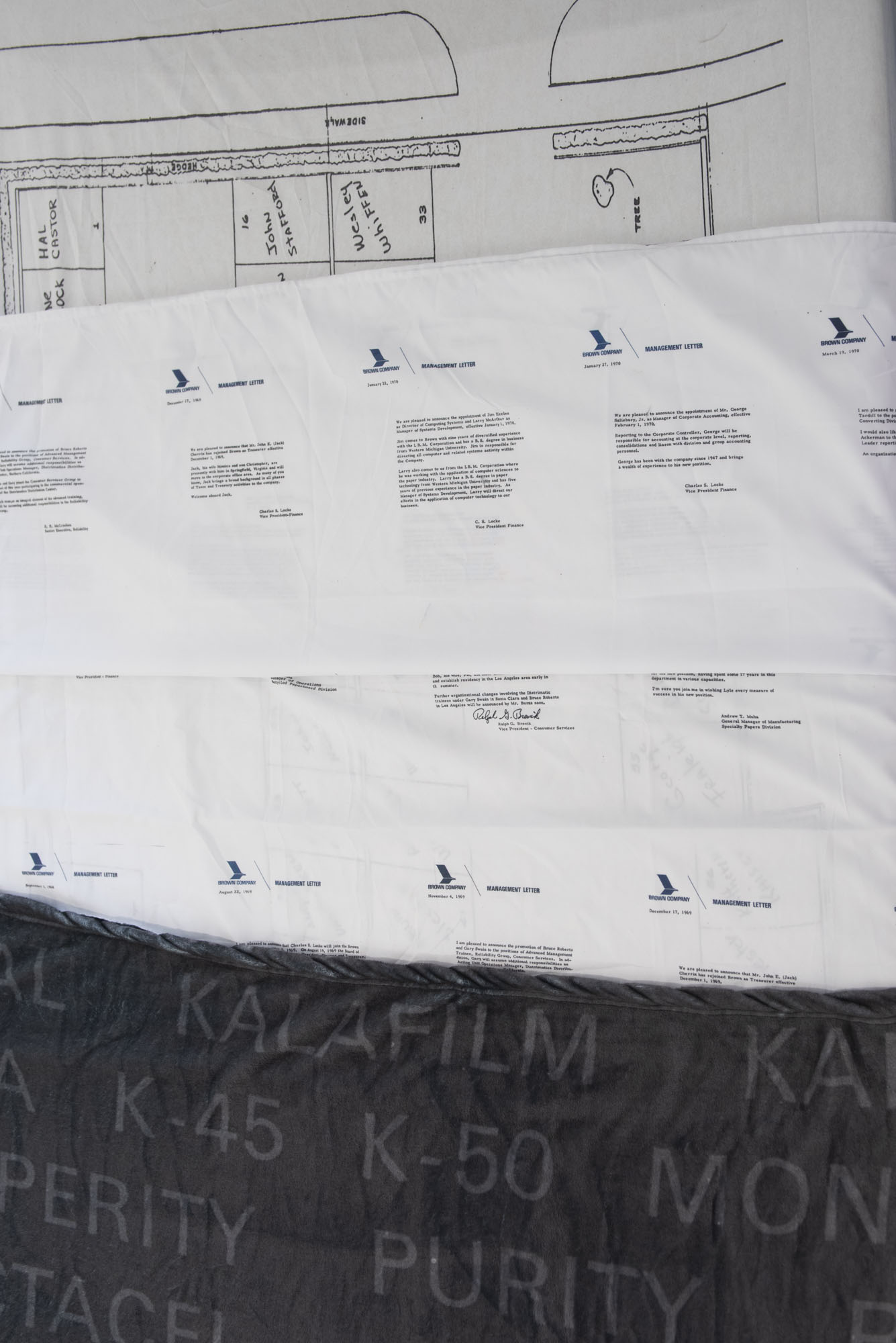
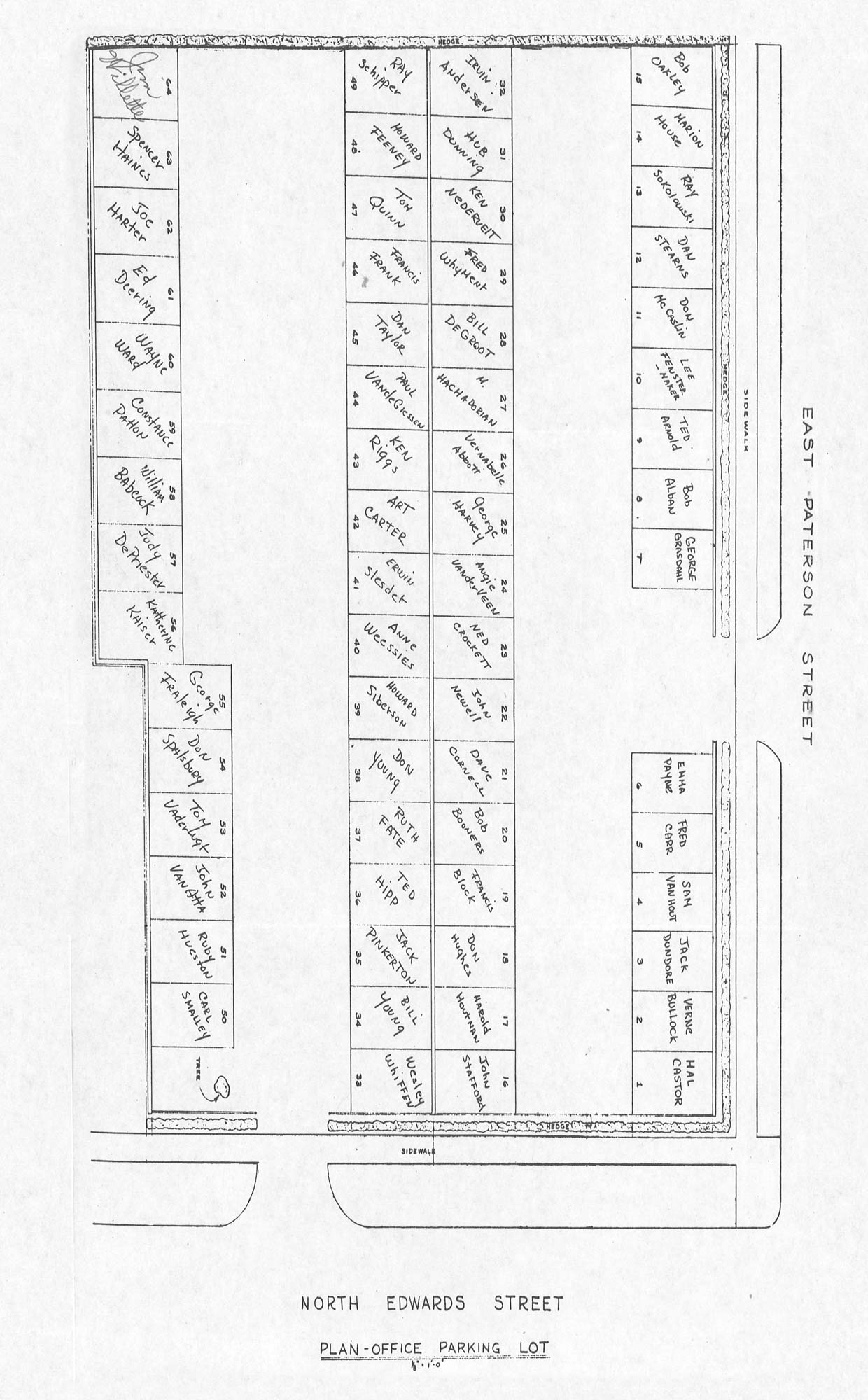
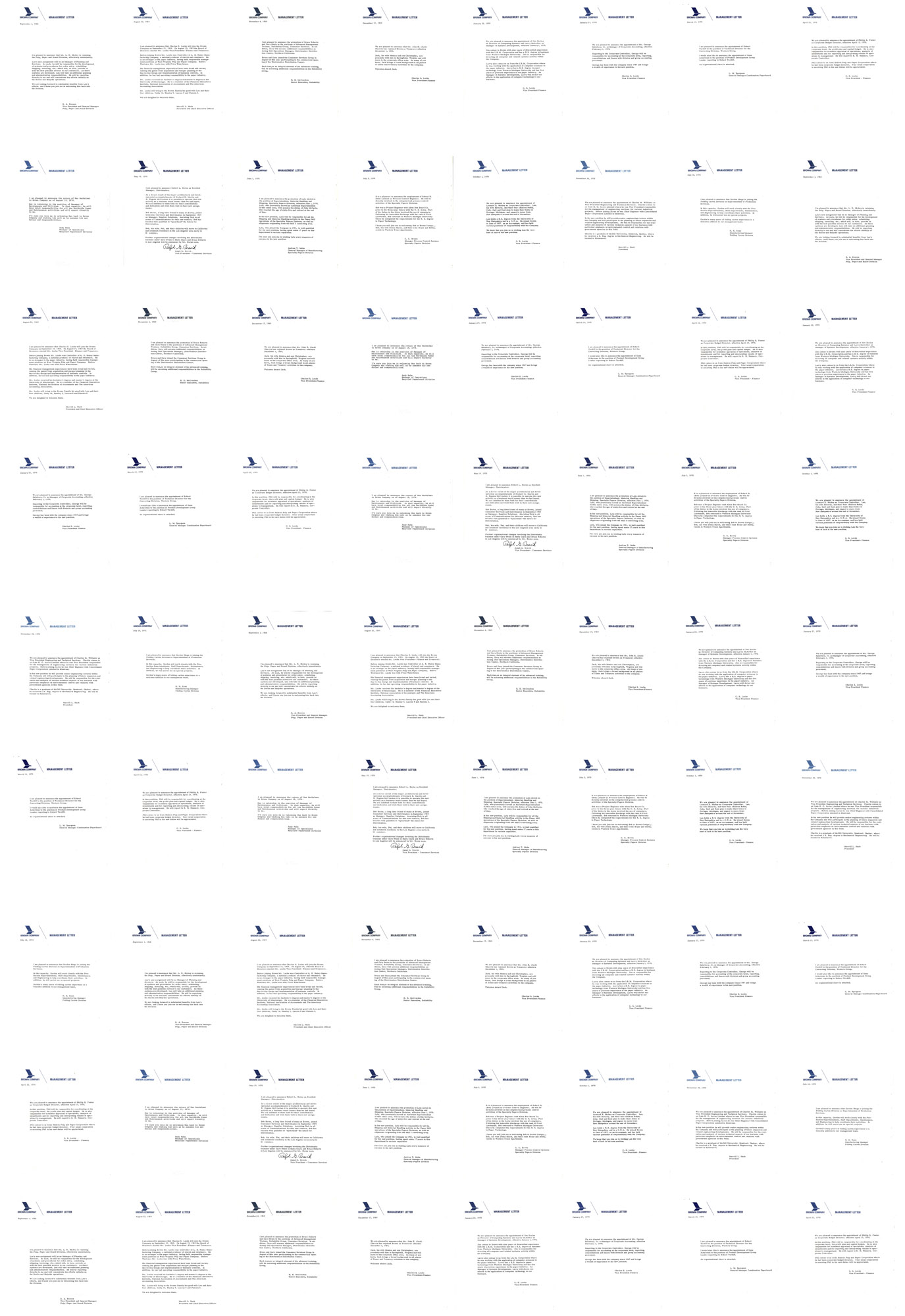
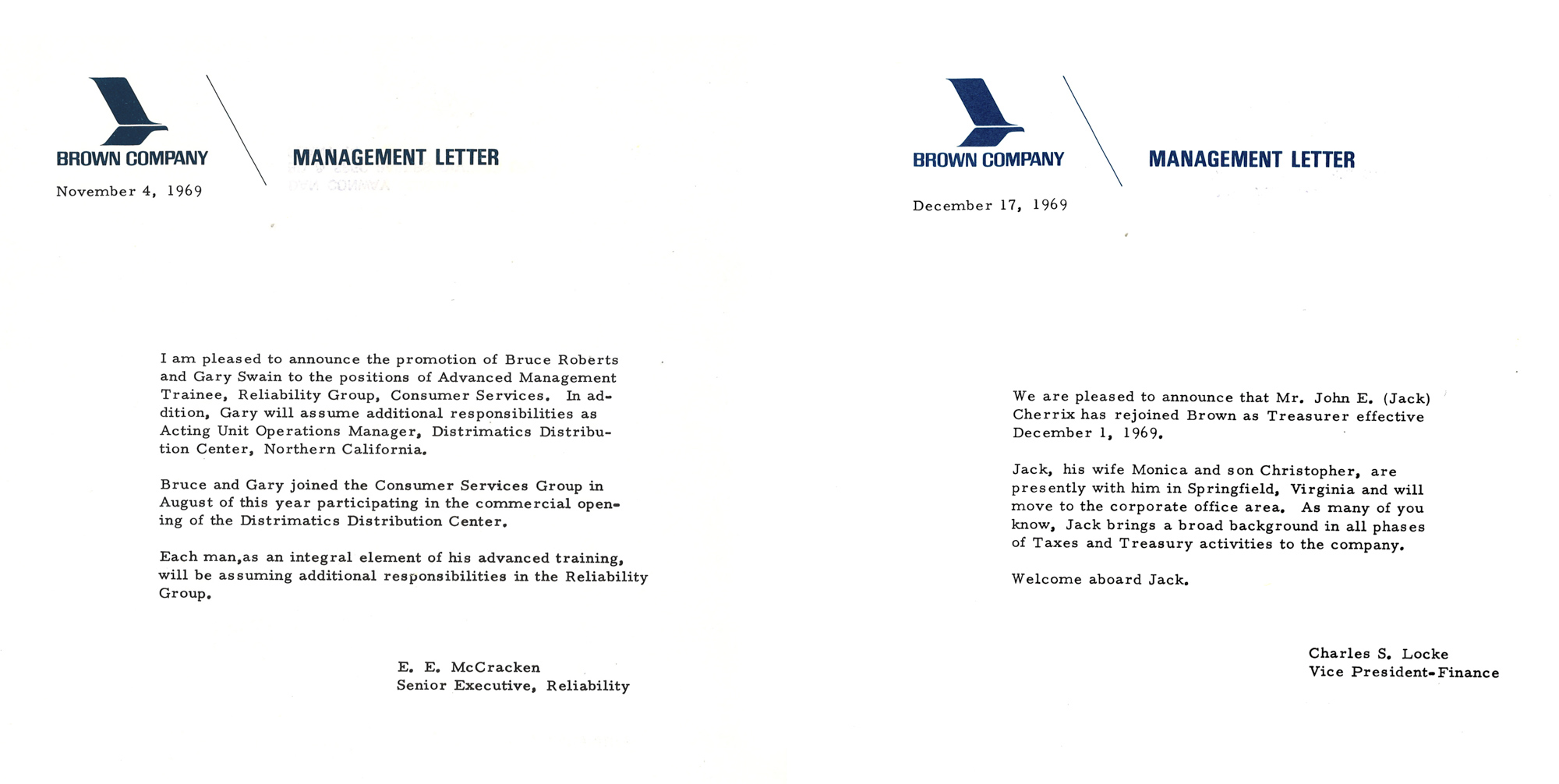
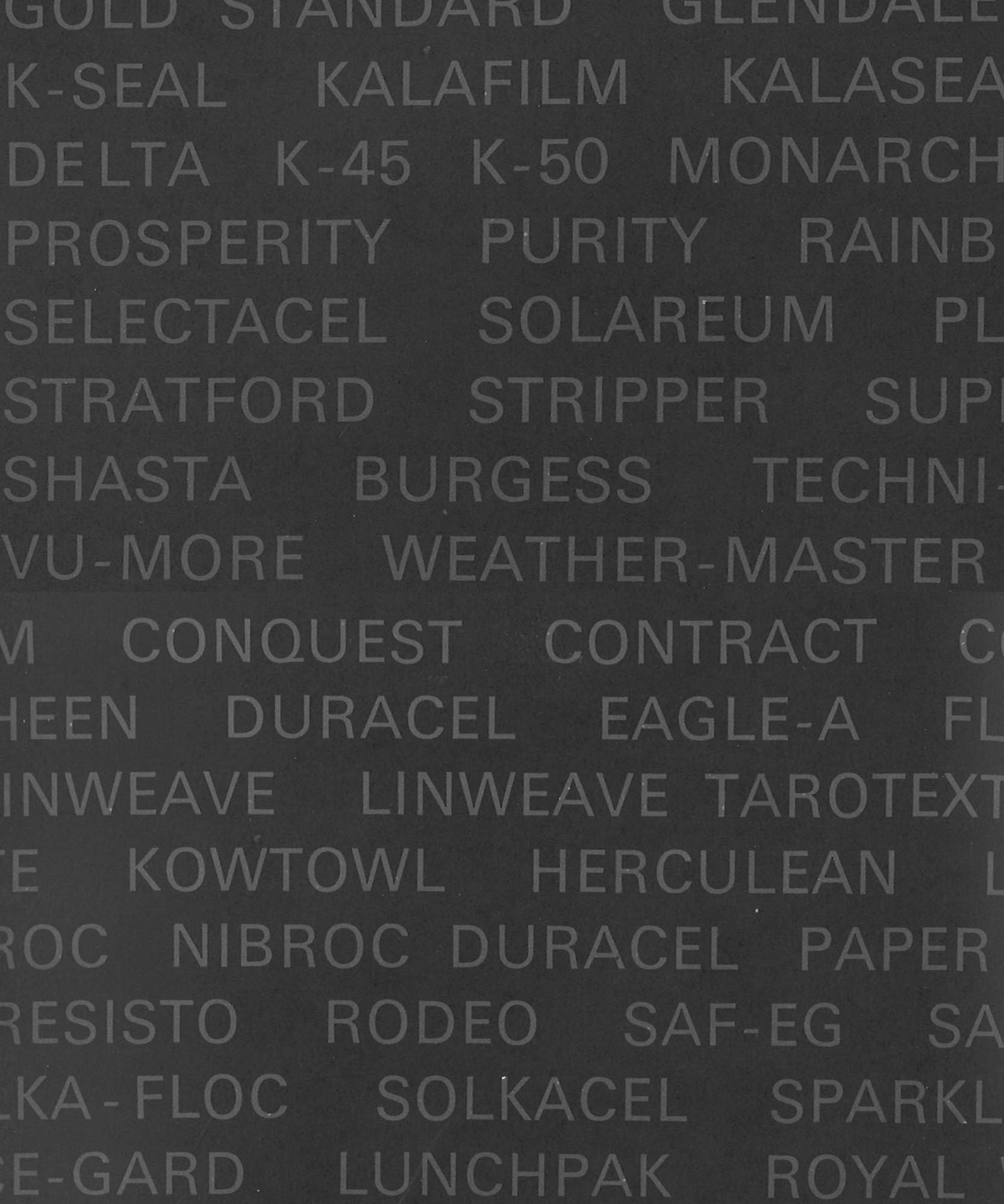
Captain America uses a boy’s bed marketed with imagery from the 2011 Paramount picture of the same name. The bed sheets are printed with archival documents from the period when Gulf and Western controlled Brown Paper Company in the 1960s and 70s. These include a diagram of the parking lot at Brown’s Kalamazoo plant (fitted sheet), promotion announcement letters (flat sheet), a 1970s annual report listing the names of Brown’s catalogue of sheet paper products, like “Stripper,” and “Conquest” (blanket) and a portrait of the board of directors of Gulf + Western's In the bed, the child is lulled to sleep encased in conglomerate dreams of upward mobility and the enticing but meaningless names of consumer products, his future mapped and diagrammed for another’s profit.

_DSC9474

Captain America (detail 1)

fitted sheet-2

Captain America (fitted sheet detail)

Brown sheet twin

Captain America (flat sheet detail 1)

Brown sheet twin psd

Captain America (flat sheet detail 2)

blanket-2

Captain America (blanket detail)

The Boy’s Room

In 1956, an Austrian immigrant named Charles Bluhdorn purchased a bumper factory in Grand Rapids, Michigan. It was the first of hundreds of companies that Bluhdorn would purchase over the next quarter century, which together formed Gulf + Western Industries, an iconic U.S. conglomerate. Gulf + Western drained profits from his manufacturing companies to fund media and entertainment companies, including Paramount Pictures. The conglomerate epitomized the larger arc of late twentieth century U.S. capitalism, which has shifted from production of goods to the branding of images and the trading of financial products. Gulf + Western’s exploitation of its manufacturing businesses left hundreds of closed and contaminated factory sites around the country.  Over those same years, its movie studio produced narrative fantasies of success, violence, love, and nostalgia that defined late twentieth century-U.S. culture.

CLICK EACH IMAGE FOR FULL VIEW